

By Lucas Rivera
I’ve lived in Sacramento long enough to see the city change in ways both hopeful and hard. One thing that’s become clearer to me: being a good neighbor isn’t always about grand gestures—it’s often about how we show up daily for people around us.
Seeing and Feeling Homelessness
Many of us pass by unhoused neighbors—on city sidewalks, in encampments, or across freeway underpasses. Recent regional surveys found over half of Sacramento area residents report seeing visible signs of homelessness almost every day. More than five in ten feel deep concern about what we’re witnessing in our streets.
But seeing isn’t the same as understanding. For many of us, homelessness feels distant, abstract. But for many who live it, it’s fraught with trauma, loss, and resilience. When we listen—to stories, struggles, and dreams—we bridge the gap between “us” and “them.”
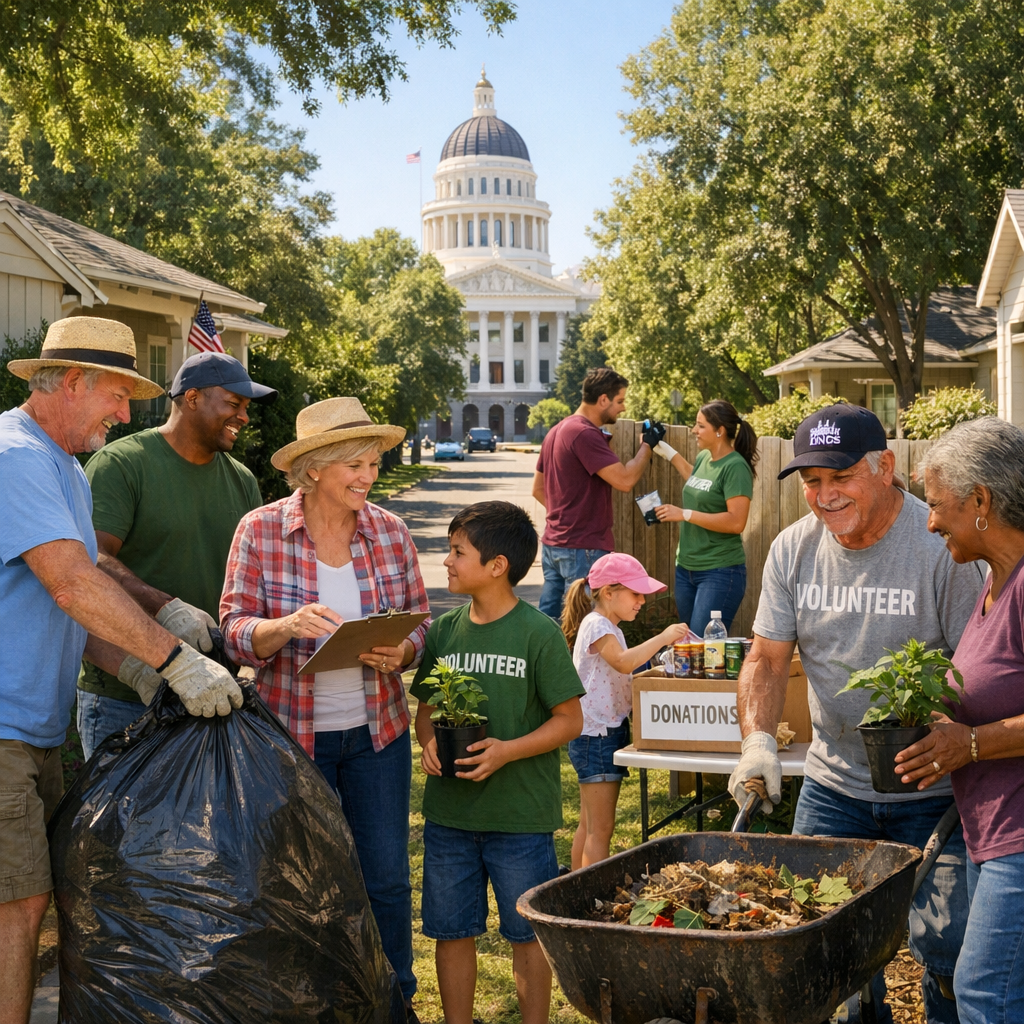
Volunteerism: A Step Toward Connection
sacramento offers many real ways to connect: the city’s Volunteer Engagement Program brings people together for cleanup efforts, events, and more. County programs let individuals lend hands in health clinics, administrative support, and direct service to seniors and children. Animal shelters like Front Street invite volunteers to spend time caring for animals in need. These roles are more than just “helping”—they’re opportunities to learn, to see things differently, to build relationships.
Through volunteering, neighbors become faces, not problems. People become someone to care about—not someone to avoid or judge.
Lived Expertise: Centering Affected Voices
One of the strongest lessons Sacramento is learning is the power of including those with lived experience in planning solutions. Bodies like the Continuum of Care Board now require seats for people who have experienced homelessness, youth representatives, and community organizations. Their voices are no longer optional—they are essential in guiding policy.
We’ve also seen initiatives such as the Point-in-Time Count move towards annual tracking, which brings community members together with providers to learn, to support, and to create space for those who are often silenced or ignored. These counts, though often procedural, become moments where dignity is restored simply by speaking and being seen.
Building a Community of Empathy
Being neighborly doesn’t always mean giving money or signing petitions—it can mean extending kindness when we pass someone on the street, asking how someone’s doing, or donating a little of our time. It’s about recognizing shared humanity.
One of the most powerful changes we can make isn’t in policy—it’s in attitude. When we shift from “they” to “we,” when we acknowledge “our city” includes every person in it, we build something better. Something more connected, more compassionate.
What You Can Do Today
- Explore volunteer opportunities through the City’s MyImpactPage portal.
- Be present: listen to someone’s story, offer a smile, a kind word.
- Support institutions that include lived-experience voices in decision-making.
- Advocate for consistent, humane treatment in outreach and housing policies.
I believe that in Sacramento, we have what it takes—heart, diversity, creativity—to soften barriers between blocks, between people. It starts with each of us recognizing that none of us is just a neighbor. We are each part of this city’s story.